
What One Soccer Family Learned Chasing the College Dream
Watch the Episode
Listen to the Episode
Episode Summary
David Murray never set out to become a soccer dad.
Growing up, sports weren't central to his family. He discovered them largely on his own, eventually becoming an enthusiastic fan and recreational athlete. So when his daughter Scout arrived—coordinated, competitive and eager to play—David and his wife, Christy, introduced her to sports without a master plan.
Soccer simply became the one she loved.
And then, almost before the family realized it, recreational soccer became something else.
When Scout was four, another parent approached David with words familiar to generations of sports parents: Your kid is pretty good. Soon she was training with someone who worked with talented young players. By five, the drills had become serious enough that Scout quit.
Looking back, David sees something larger in that seemingly innocent beginning.
They'll get you by flattering you, and they'll get you by making you anxious.
The flattery tells parents their child may be special. The anxiety comes later: the better team, the more competitive league, the tournament you shouldn't miss, the exposure you might lose and eventually the fear that someone else's child is getting ahead.
Scout returned to soccer and continued progressing. David and Christy took an unusually hands-off approach. They didn't understand enough soccer to critique every touch or dissect practices on the ride home. David jokingly describes himself as the "hippie dad" who assumed that if Scout were good enough, she would eventually find her level.
There were costs to that approach. David acknowledges times when he wishes he'd understood the youth-sports system better and advocated differently. But something important survived: Scout always knew soccer belonged to her.
Her parents weren't building spreadsheets about teams or engineering her career. They were following.
You're going to make as many mistakes off on the sideline as your player makes on the field.
And that leads David to one of the most useful admissions in the conversation: being hands-off isn't enough anymore. Modern youth sports can require parents to understand a complicated system while simultaneously resisting the urge to take ownership of the experience.
David's advice isn't to become the perfect sports parent. It's to do what we ask athletes to do: recognize the mistake, learn from it and move on.
As Scout's ambition grew, however, the stakes changed.
By high school she was one of Chicago's stronger players, but an introduction to elite ECNL soccer showed her how much higher the level could go. David remembers the ride home after one early experience: Scout sobbing as she confronted the possibility that she wasn't as good as she'd believed.
She could have backed away.
Instead, she decided she wanted to find out how good she could become.
That pursuit eventually took her to Division I soccer at Ohio University—but getting there didn't end the story. In some ways, David says, that's where another story began.
College soccer brought extraordinary friendships and moments of accomplishment. It also brought uncertainty, reduced playing time, emotional swings and the realization that achieving the destination doesn't eliminate the difficulty. David describes sitting in a car after a college playoff game while Scout sobbed in the back seat, then driving seven hours home alongside Christy in near silence.
There was nothing to fix.
Their daughter simply needed to know they understood how much it mattered to her—and that they loved her.
That experience helped sharpen something David and Christy had believed throughout Scout's journey: sports need a purpose larger than the result.
Wins aren't enough. A roster spot isn't enough. Even a college scholarship isn't enough to justify the amount of family time, money, emotion and childhood consumed by high-level sports.
For the Murrays, one of those larger purposes was community: teammates, friendships and learning to be part of something bigger than yourself.
That's what we're doing this for.
That's why David is particularly passionate about high school sports. Scout's club experiences helped her reach the next level, but some of her happiest memories came playing for Lane Tech, alongside friends and in front of her community.
After one championship, Scout asked her dad whether that night might eventually rank among the ten best nights of her life.
David thought about it.
She could live a pretty wonderful life and still have trouble finding nine better.
He quietly realized it might rank among the best nights of his life, too.
And maybe that's the lesson at the heart of Soccer Dad.
Dreams are worth pursuing. David believes there is genuine value in following a passion as far as it can take you. But parents have a responsibility to periodically look beyond the next team, tournament, recruiting opportunity or scholarship and ask a more important question:
What are we hoping our child—and our family—will ultimately get from all of this?
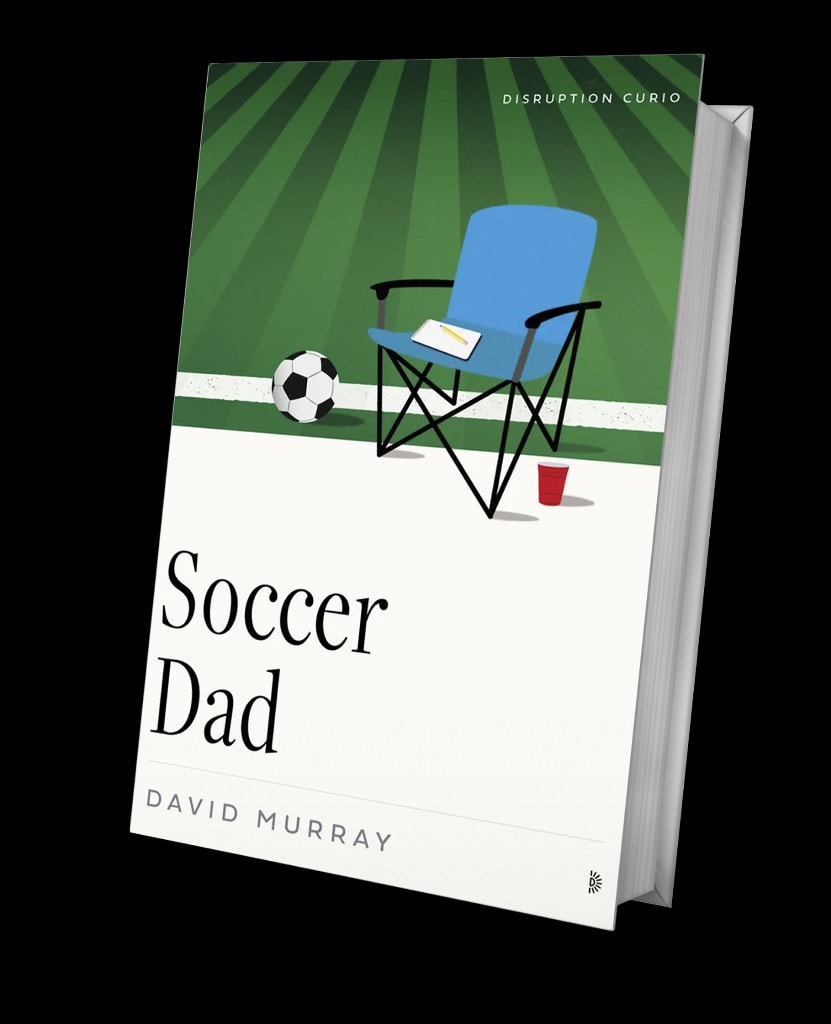
FROM DAVID MURRAY
Soccer Dad
An honest account of one family’s journey through youth, travel and Division I soccer.
Top 5 Takeaways
LEARN THE SYSTEM WITHOUT TAKING OVER THE JOURNEY.
Modern youth sports are complicated. Parents may need to understand clubs, levels, coaches, recruiting and opportunities in ways previous generations didn’t. But David’s experience shows the challenge: learn enough to guide your child without making the pursuit yours. Scout always understood that soccer was her passion because her parents allowed her to lead it.
FLATTERY AND ANXIETY CAN CHANGE HOW PARENTS MAKE DECISIONS.
“You’re really good.” “You should be on this team.” “You can’t miss this tournament.” Early praise can make parents feel their child is special; later, fear can make them believe every opportunity is essential. David’s advice isn’t to distrust every coach or club—it’s to recognize those emotional forces before they start making decisions for your family.
REACHING THE DESTINATION DOESN’T ELIMINATE THE STRUGGLE.
Division I soccer was Scout’s goal, and she achieved it. But David’s account of her college years is a reminder that reaching the next level introduces another set of challenges: playing time, confidence, competition, expectations and enormous emotional swings. Parents and athletes should understand what the destination actually asks of them—not simply what it represents.
DON’T SACRIFICE TODAY’S JOY FOR TOMORROW’S POSSIBILITY.
David believes Scout needed the higher level of ECNL competition to prepare for college soccer. He also treasures what she found in high school soccer: friends, community, belonging and joy. Development and ambition matter, but if every decision is made solely to maximize some future outcome, families can miss experiences that may ultimately mean the most.
KNOW YOUR FAMILY’S BIGGER REASON.
Competitive sports consume time, money and emotional energy from the entire family. David believes that demands a purpose greater than a scholarship or roster spot. Ask what you hope your child is learning, who they’re becoming, what relationships they’re building—and what your family wants to remember when the games are over.
Take This With You
The Parent Playbook
Every Be Valiant guest leaves sports parents with something practical they can take into their family’s sports journey. This is David Murray’s contribution to the Valiant Parenting Playbook on PlayFearless.org.
Be honest about why you’re doing this.
David encourages parents to be honest with one another about what the sports journey really feels like—the excitement, uncertainty, sacrifice, pressure and difficulty.
But the most important conversation may happen inside your own family.
Ask yourselves: What is our highest purpose for doing this?
David’s point is that competitive youth sports ask too much of an athlete and family for the ultimate purpose to be simply earning a college scholarship.
“It’s a family project, and you should be doing it for a big reason.” — David Murray, 1:04:31
That bigger reason will be different for every family. What matters is knowing what yours is—and returning to it when the pressure of the journey makes it easy to forget.
Help Us Keep Going
Help us reach more families — so more kids have happy moments and fewer harmful ones.